
Insense Inc. – Chip Manufacturing Testing Engineer Intern
Location: Insense Inc., San Jose, CA
Timeframe: Summer 2018
Introduction:
MEMS (Micro-Electro-Mechanical Systems) gyroscope sensors enable critical motion sensing capabilities in smartphones, wearables, drones, and autonomous vehicles at significantly lower cost and power consumption than conventional gyroscopes. The objective was to fabricate MEMS gyroscope sensors on a nano-scale for low cost and in large batches. These gyroscopes were directly fabricated on ASIC substrates and were capable of powering multi-sensing platforms with timing devices—advances over conventional gyroscopes that could allow for unprecedented user experiences in consumer electronics and robotics applications.
Design & Development:
My task was to evaluate which vapor extraction recipe on the MEMS sensor (gyroscope) fabrication allowed for an even release over the gyroscopes at a micrometer level. After a successful release was achieved, I tested each gyroscope for electrical continuity and fidelity.
Vapor Extraction Optimization:
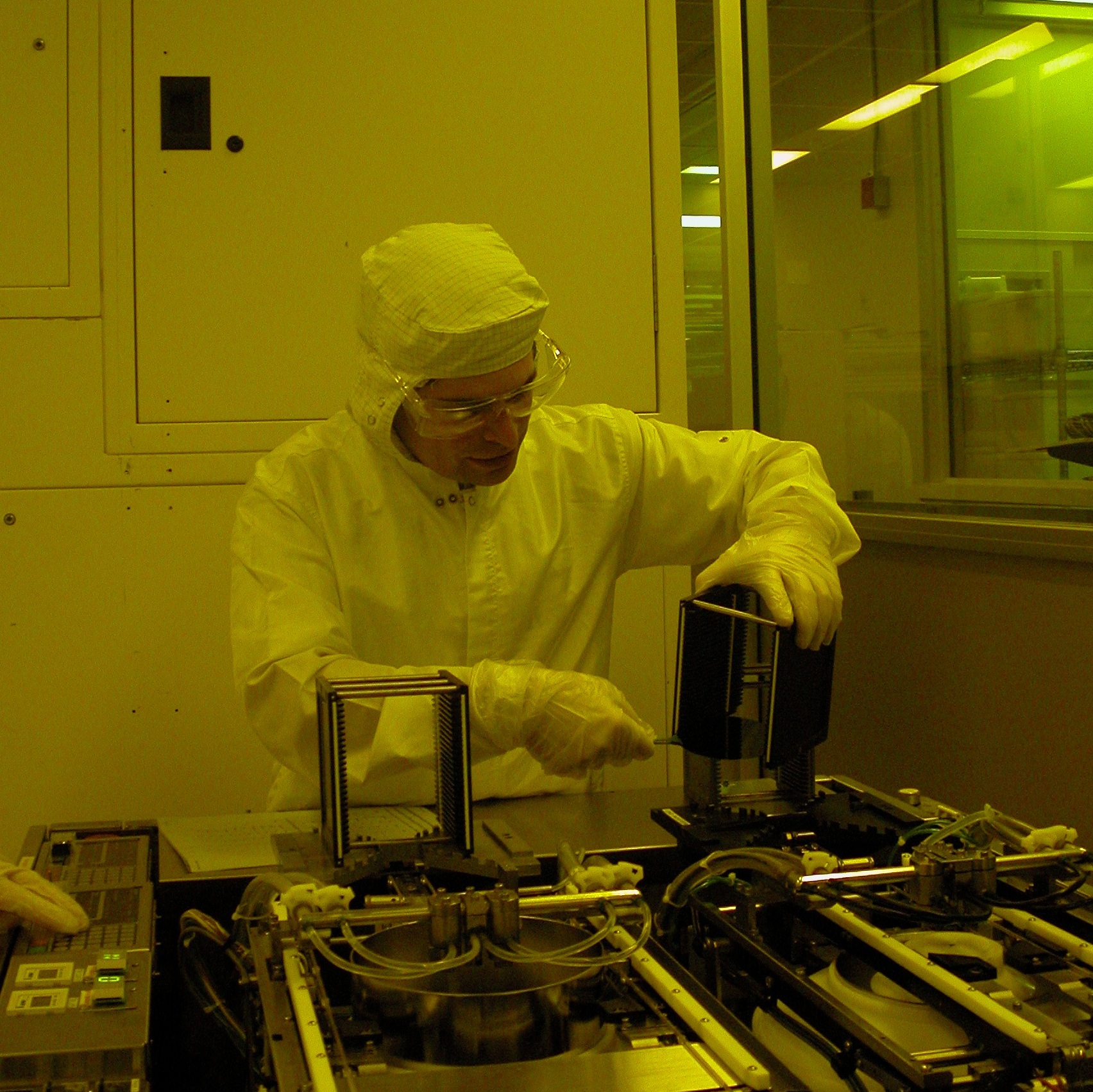
I adjusted levels of HF vapor on the vapor extraction process and exposure time using the μEtch wafer machine to evaluate the response on “evenness” of the fabricated gyros. This process was critical because uneven release could cause structural defects or performance variations across the sensor array. I mapped the 3D topography of the fabricated gyros to check the evenness with a S neox microscope, providing quantitative assessment of surface uniformity at the sub-micrometer scale.
Electrical Testing and Validation:
I used a probe microscope, oscilloscope, and function generator to provide a desired range of voltage over the system to check each gyro. Applied precise 1.5 mV testing protocols to ensure accurate signal transmission across chip architectures, verifying both optical and conductive consistency on processed chips using electron microprobe analysis.
All work was executed within Stanford’s nano-fabrication clean room, requiring strict adherence to contamination protocols and precision handling of sensitive equipment.
Challenges I addressed:
- Steep learning curve of working in a clean room with complex machinery and contamination protocols
- Mapping out and using low-powered microscopes to assess even levels on fabricated gyros at micrometer resolution
- Understanding the factors that could affect the processing of the wafers, including temperature, vapor concentration, and exposure timing

Evaluation:
The vapor extraction recipe optimization identified optimal HF vapor concentrations and exposure times that produced gyroscope releases with uniform topology across the wafer, reducing height variation to within acceptable tolerances for production-grade sensors. The 3D topography mapping revealed that specific parameter combinations (adjusted vapor levels and controlled exposure times) achieved consistent release depths across multiple fabrication runs. Electrical continuity testing confirmed that gyroscopes fabricated with the optimized recipe maintained signal fidelity within the 1.5 mV precision requirements, validating the process for large-batch manufacturing. The systematic testing protocols I developed enabled the manufacturing team to identify and eliminate defective sensors early in the production pipeline, improving overall yield.
Conclusion:
This internship taught me how to work with nano-scale fabrication processes, operate advanced characterization equipment in clean room environments, and systematically optimize manufacturing parameters through quantitative analysis. The experience of correlating process variables with fabrication outcomes and developing rigorous testing protocols has informed my approach to experimental design in robotics research—particularly in understanding how small parameter adjustments can significantly impact system performance and reliability.
 Dhruv Lal