
Where it started:
My path into engineering runs straight through FIRST Robotics. Palo Alto High School’s team was student-led and student-run: upperclassmen taught incoming students the tooling of the shop, and those students grew into the ones doing the teaching. I learned to weld from the students ahead of me and taught myself pneumatics because our robot needed it, spending long days at school after class to get the build finished. Each season brought a brand-new game, and with it a brand-new engineering problem: weeks of rapid prototyping, testing, and redesign to arrive at a robot that could compete. That yearly cycle of open-ended problem solving is what FIRST is about, and it is what hooked me. By the time I was an upperclassman I was on the other side of the exchange, training incoming students on the mill, CNC, and welding, and serving as build lead for our competition robot.
Testing of the Intake Process

Front view of bot
Testing of shooting process
Why I give back:
That team worked because students taught students. Every skill I brought out of that shop, and the confidence that I could learn the next one on my own, came from someone a year or two older deciding it was worth their evening to show me. I am also aware that access to that experience depends heavily on circumstance. Not every student grows up exposed to tools and building, and without that exposure the confidence to really dive in never gets the chance to form; members quietly leave a team when they do not feel they belong on it. I want students of every background to be able to enter STEM and explore it safely. That is why I give back.
Woodside High School:
In the years between finishing my undergraduate degree at Purdue and starting at Intel, I served as a volunteer coach for Woodside High School’s FIRST Robotics team. I came on to help structure the team and became a lead the students could rely on through the season: advising their designs, working through game strategy with them, and teaching the shop skills a competition robot demands, from the mill, lathe, and CNC to pneumatics and electronics.
What I value about FIRST goes far beyond the robots. Each season hands students a hard, open-ended problem and a culture that expects them to compete intensely while respecting every team in the room. As a coach, what mattered most to me was making sure students were given real opportunities to lead: room to engage their creativity, own a piece of the robot, and expand what they believed they could take on. That is the same handoff that pulled me up when I was in their seat.
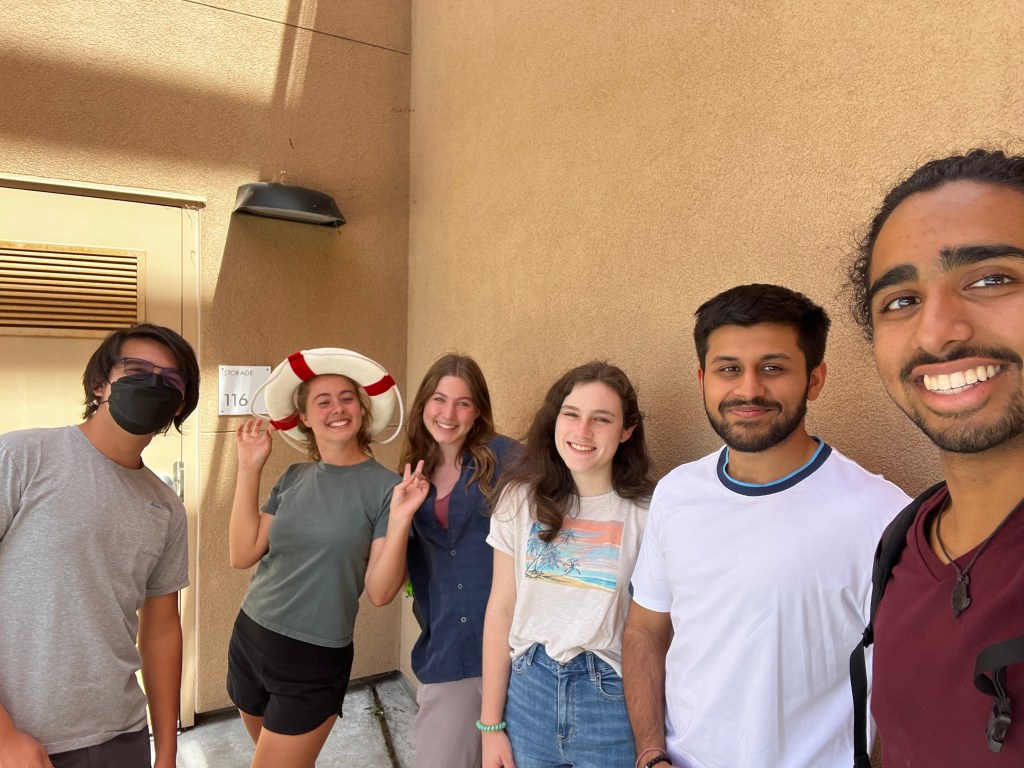
With a few of my Woodside students, 2020. Wishing every one of them a bright and fruitful road ahead.

