
Intel Corporation – Process Engineer
Location: Intel Corporation, Hillsboro, OR
Timeframe: March 2022 – May 2024
Introduction:
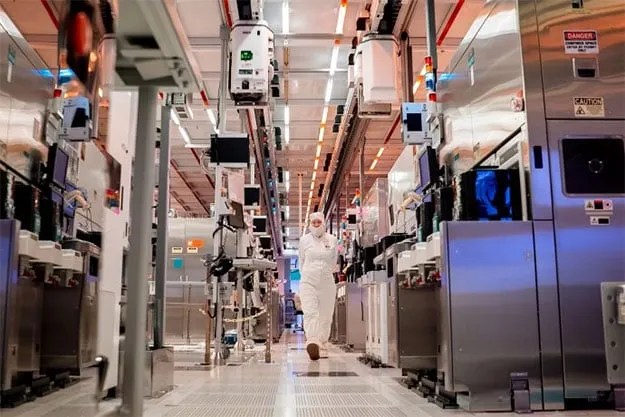
Semiconductor manufacturing requires rigorous safety protocols, quality control, and efficient troubleshooting systems to maintain production uptime and worker safety in complex fabrication environments. As a Process Engineer at Intel, I was responsible for establishing safety specifications, optimizing quality procedures, and developing troubleshooting databases for a new fleet of wafer processing tools being phased into high-volume production across multiple fabrication facilities.
Design & Development:
My work focused on three critical areas: safety system implementation, quality procedure optimization, and proactive troubleshooting infrastructure.
Safety System Implementation:
The new tool set being phased in for high production wafer runs lacked safety specifications on what chemicals were present on the tool, leading to potential safety accidents if incorrect chemicals were introduced during maintenance work or if team members had chemicals spilled on them. I dove into chemical SDS sheets and created a comprehensive table for all chemicals on the tool and their correct safety responses to be added into Intel-wide specifications for other FABs adding these tools as well. Additionally, safety chemical stickers for emergency response teams were missing on these new tools—some tools were missing them altogether. I worked with other installation divisions to acquire these stickers and add them to the full fleet of tools to ensure safety of all working on the job.
Quality Procedure Optimization:
Procedural steps for a common, high-risk tool adjustment had potential for mistakes to occur as the steps were numerous and accounted for many different situations. This led to several instances of misreads and mistakes due to the difficulty of going through the procedure. The procedure was for adjusting how far from the wafer edge a specific nozzle dispenses chemistry. Based on data from tool trends of particles on the wafer post-processing, we could determine if this procedure needed to be made. However, if done incorrectly, it could cause the wafer’s edge to not be in-line with the goal, leading to expensive wafer scrap.
When working through the procedure, I found that to prevent misadjustments, we would better organize the steps so that one had to go through a verification step at the end of the procedure to verify the correct aspects of the tool were adjusted. I restructured the procedure with this verification checkpoint to reduce human error.
Proactive Troubleshooting Database:
The new tool set lacked documentation on the different recipes for the numerous wafers processing on the tool. Because of this, troubleshooting specific errors for each recipe was difficult since the team did not know how the tool fetches the recipe; additionally, the team needed help understanding the different chemicals dispensed for each recipe. This was critical as troubleshooting tool errors on such large and complex tools requires specific understanding of which chemicals are being dispensed and from where. In error responses, my team was specifically tasked with determining if the chemical dispenses were clean (ramp rates were appropriate) and if they actually dispensed on the tool.
Since these tools were just starting up, many recipes found may have only been for testing purposes and not necessary for us to learn as everyday dispenses. I pulled data for the past month and extracted the names of each recipe that had a higher percentage of the runs (roughly >10% or ~1,000 runs). After this, with coordination with the specific tool engineers, I pulled out the different dispenses of chemistry on each tool (these dispenses are standardized names across all tool sets). This resulted in the creation of a large table that allowed me to cross-reference a recipe name with its coordinated dispenses to help improve troubleshoot response times.
Seeing further ways to improve the team’s understanding of these tool sets, I moved to creating a table with all the data necessary to manually load these tools with each recipe for troubleshooting purposes (such as post-maintenance stress cycles, repours of the chemistry to keep chemistry cycling in the tool, and more).
Evaluation:
The safety specification table and chemical sticker implementation were adopted Intel-wide across all FABs deploying the new tool set, ensuring consistent safety protocols and eliminating potential chemical response confusion during emergencies. The quality procedure restructuring reduced human error cases from several incidents per quarter to zero after implementation, preventing costly wafer scrap. The recipe repository database with tool pairing reduced error detection time by 25%, significantly improving troubleshooting efficiency and production uptime. I received a department award for improving preventive maintenance procedures for etch dispense length optimization, validating the impact of these systematic improvements.
Conclusion:
This experience taught me how to systematically identify process gaps in complex manufacturing environments and develop scalable solutions that impact multiple facilities. The skills I developed in creating comprehensive documentation systems, optimizing procedures for human factors, and building databases for faster troubleshooting have directly informed my approach to developing robust, reliable systems in robotics research—particularly in ensuring safety protocols and systematic testing frameworks for autonomous systems.
 Dhruv Lal