
Introduction:
Rural electrification is critical for economic development and quality of life in underserved communities, yet many villages in developing countries lack access to reliable electricity infrastructure. Small-scale hydroelectric systems offer a sustainable, low-maintenance power solution for communities near rivers. The objective was to create a product that assists people with a specific task—in this case, I chose to design a low-cost, low-maintenance, and high-output hydroelectric system for rural villages in India to serve as a source of electricity to power homes. Throughout the semester, I took the idea through initial stages to a medium-fidelity prototype as if it were a real product.
Design & Development:
Design Methodology:
I created P-diagrams, House of Quality matrices, and cost spreadsheets to detail the construction, goals, and potential shortcomings of the desired product. I created weekly update emails to clearly and concisely explain the work and goals achieved, simulating real product development communication practices.
Technical Analysis:
I investigated estimated output levels based on environmental changes of water flow for the system, accounting for seasonal variations including monsoon conditions. I determined village locations near major rivers where the product would be viable, establishing the consumer base. I compared the product to alternative choices (diesel generators, solar panels, grid extension) and found advantages and disadvantages for market positioning. I utilized ROI analysis to determine when the product would be economically viable for target communities.
Design Challenges and Solutions:
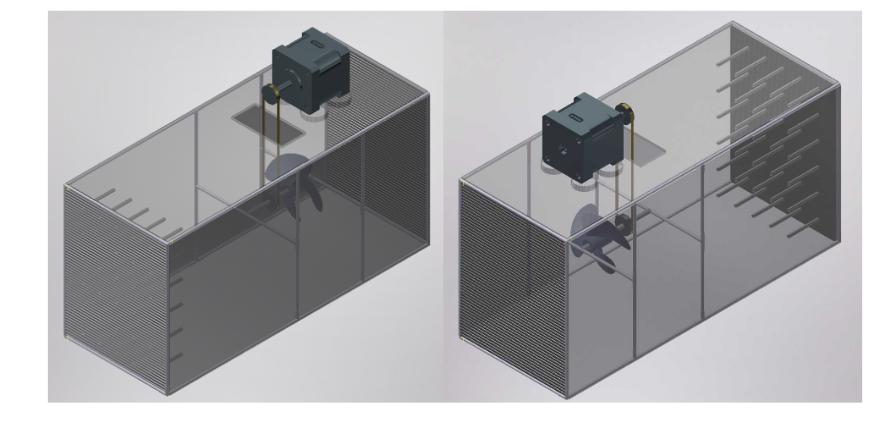
The system needed to be operable by users with varying education levels, requiring intuitive installation and operation without technicians. I designed the product to utilize locally available parts—specifically PVC piping and chicken wire mesh—to ensure repairability and reduce costs. To protect electrical components, I moved the motor to a location where water could not reach it by using a belt system to transfer power from the water blade shaft to an elevated motor location.
I created a tethering subsystem to keep the hydroelectric generator anchored in place against river currents. The system needed to handle dramatic environmental changes such as monsoon season when water flow increases significantly. I designed a flow-directing subsystem using shaped PVC and mesh to efficiently direct water around the blade, ensuring steady rotation and maximizing energy capture. The enclosure needed to remain somewhat hydrodynamic and not disrupt the river ecosystem, avoiding debris accumulation and minimizing environmental impact.
Evaluation:
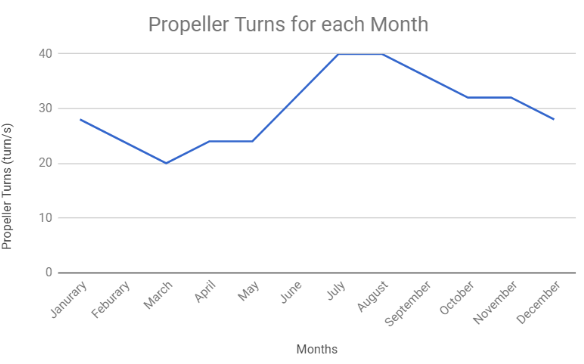
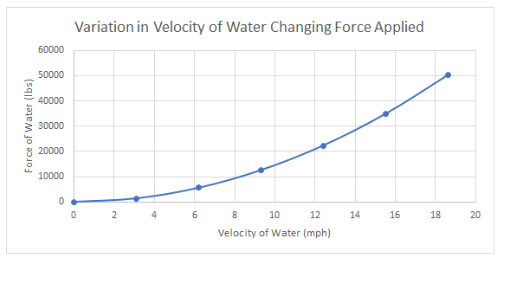
The CAD prototype demonstrated mechanical feasibility with locally sourced materials (PVC and chicken wire) keeping material costs under target thresholds for rural affordability. The estimated propeller speed analysis across monthly environmental factors showed the system could generate consistent power year-round, with controlled variation during monsoon season due to the flow-directing subsystem design. Force calculations on the tethering subsystem confirmed it could withstand increased water velocities during peak flow periods without requiring repositioning or maintenance.
The ROI analysis revealed the system would become economically viable within 18-24 months compared to diesel generator alternatives, factoring in fuel costs and maintenance. The House of Quality assessment identified that the belt-drive motor protection system and locally available materials were critical success factors for long-term sustainability. Market comparison showed advantages in maintenance requirements (minimal) and fuel costs (zero) compared to diesel generators, though initial capital cost was higher than some solar alternatives.
However, the medium-fidelity prototype revealed challenges in scaling production and standardizing installation procedures across different river conditions. The flow-directing subsystem required site-specific tuning, suggesting a need for simplified adjustable mechanisms in future iterations.
Conclusion:
This project taught me how to approach engineering design through the complete product development lifecycle—from market analysis and requirements definition through detailed design and economic viability assessment. The experience of designing for real-world constraints (local materials, varying user capabilities, environmental extremes) and balancing competing objectives (cost, performance, maintainability) became foundational to my engineering approach.
The skills I developed in systematic design methodology (P-diagrams, House of Quality), stakeholder communication, and designing for manufacturability with limited resources have directly informed my approach to research projects. Understanding how environmental variability affects system performance and the importance of designing for user capabilities without assuming technical expertise became particularly relevant in my work on robust autonomous systems that must operate reliably across diverse conditions.
 Dhruv Lal